
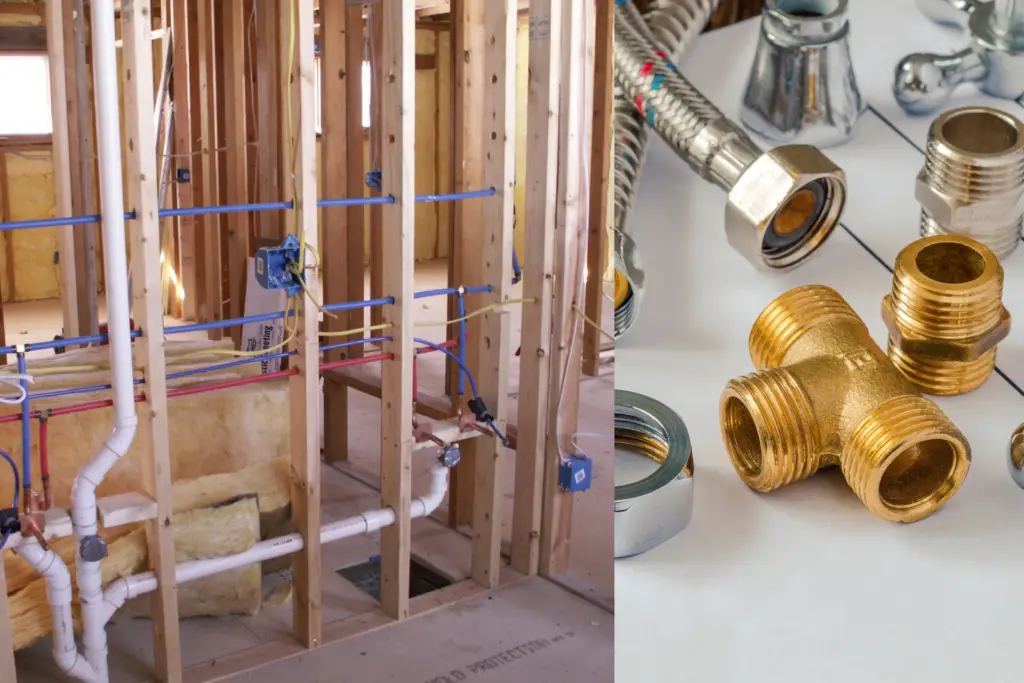
Whole House Pipe Replacement in the DC Metro Area
Every pipe in a home ages. After enough years, the signs stop being one-off problems. A leak here, low pressure there, water that never quite runs clear — it starts being a pattern. The piping itself has reached the end of its life.
Custom Flow Plumbers replaces whole-house piping for homeowners across the DC metro area. We look at the condition of the system as a whole. We explain what we found in plain language. Then we replace the piping when that’s the honest fix. We won’t sell you one more repair on pipes that will leak again somewhere else.
Signs the whole system is wearing out
- Repeated leaks — fixing one, then another in a different place a few months later
- Pinhole leaks that keep coming back — one can be a one-off; a pattern usually means the pipe wall is thinning throughout
- Low water pressure through the whole house that has gotten worse over time
- Rusty or discolored water, especially first thing in the morning or after the house sits unused
- Visible corrosion on exposed pipes in the basement, crawl space, or utility room
- Pipes old enough that repairs are getting hard to justify — each fix costs real money and buys less time than the last
Still, any one of these can have a simpler cause, and we check that first. But when several show up together, the pattern is the diagnosis.
Repair, partial replacement, or whole-house?
That depends on the condition of the piping, not on what we’d rather sell you:
- A spot repair still makes sense when the rest of the system is sound and the problem is in one place.
- Replacing one part of the system can be the right middle step. That works when the wear is concentrated and the rest tests sound. A common one is the entire basement. That covers all the piping across the basement, including the fittings where it connects to the risers going up.
- Whole-house replacement is usually the better call when leaks keep recurring in different places. It also fits when corrosion is widespread, or the piping is at the end of its life throughout. Replacing a failing system once beats paying to open walls for it again and again.
We show you what we found and explain the reasoning either way — the decision is yours, made with the facts in front of you.
How the work goes
- We assess the whole system: exposed piping, pressure, water quality, and your leak history. We don’t judge the system by its worst foot of pipe.
- We explain what we found: where the wear is, and whether it’s localized or system-wide. We also tell you which of the three routes above we’d take if it were our house, and why.
- We plan the replacement with you: the scope, the order of the work, and what to expect day to day. Everything is laid out before any work starts. When the job needs a permit, we pull it.
- We do the work. The old piping comes out — we never leave old piping behind in the walls. We install the new piping and test it. Water comes back on section by section as the work allows.
- We walk it with you — what we replaced, and anything worth knowing for the future.
FAQ
How do I know I need the whole house done, and not just a repair?
First, count the pattern, not the last leak. One leak in otherwise sound piping is a repair. Leaks recurring in different places, widespread corrosion, and pressure dropping house-wide are system problems — and system problems don’t stay fixed with spot repairs. We assess the whole system and show you what we found before recommending either route.
Can you replace just part of the house?
Sometimes, yes — if the wear is genuinely concentrated in one area and the rest of the system is sound, a partial replacement is the honest scope. A common partial is the whole basement — every pipe across the basement, including the fittings where the basement piping connects to the risers going up. In contrast, if the rest is failing too, we’ll say so and show you why, rather than letting a partial job turn into a second full job later.
What kind of pipe do you install?
PEX, copper, and CPVC. Which one goes in depends on the house, the run, and what’s already there — we explain the choice for your home before the work starts.
Walls, timing, and moving out
Who patches the walls afterward?
Where pipes run inside walls, we open what’s needed to reach them. We don’t repair walls — closing them back up and refinishing is the homeowner’s side, or a finisher they hire.
How long does a whole-house replacement take?
In short, it depends on the size of the home, how the piping runs, and access. After we’ve assessed the house, we’ll tell you plainly what to expect — including how water service works during the job — before any work starts.
Do I have to move out while it’s done?
For most homes, no — but it depends on the scope and how we sequence the work. That’s part of the planning conversation in step 3, and you’ll know the answer before you commit to anything.
Why Custom Flow
- Licensed & Insured · WSSC License #P 74018
- Rated 5.0 stars on Google
- 2-Year Parts & Labor Warranty on work we supply and install
- A local company serving the whole DC metro area — when you call, you reach the company that does the work
Pipes past repairing? Call (301) 971-4884 — Monday to Friday, 8am to 5pm.